
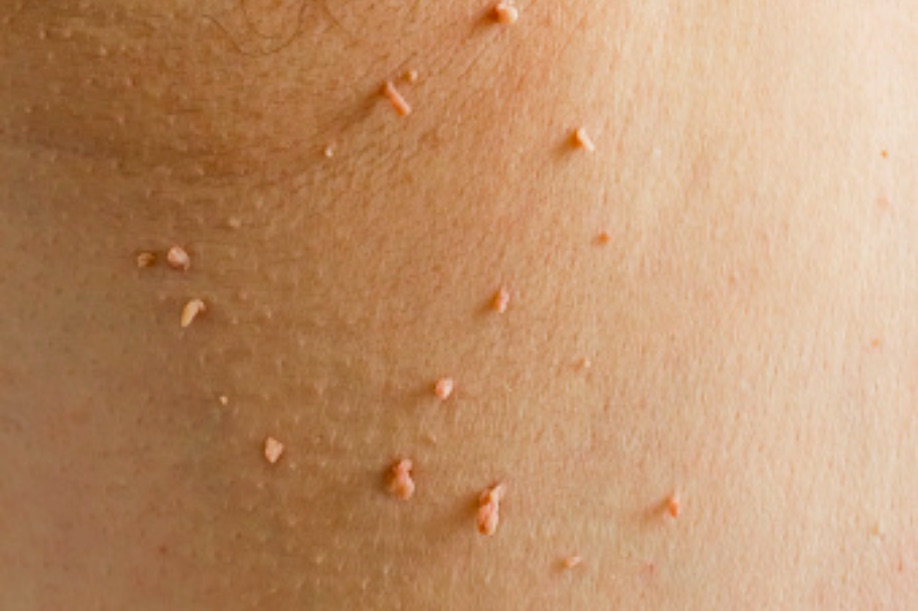
Skin tags are common, especially as a person ages. They don’t cause any harm, but if you have a skin tag that is bothering you, you should talk to your doctor about having it removed.
They are usually less than 2mm in size, but they can grow much larger. They feel soft, and can be smooth and round, wrinkly and uneven, or look like a grain of rice. They can be flesh coloured or darker, sometimes dark blue.
If you ever notice a new spot or growth on your skin, you should always see your doctor to confirm what it is. Read more about whether you should be checked for skin cancer.
Skin tags are made of collagen (a type of protein) and blood vessels surrounded by skin. They are usually found in the folds of the skin, for example, in the armpits, groin, thighs, eyelids, neck or under the breasts.
Skin tags are small growths on the skin and are usually less than 2mm in size.
What are the symptoms of skin tags?
Most skin tags are painless and don’t cause any symptoms. But if they rub on clothing or jewellery, they may get sore and bleed.
Skin tags look different from warts and other benign skin lesions because of the small stalk that attaches them to the skin. Warts tend to be flat, while skin tags hang off the skin.
What causes skin tags?
Skin tags occur when extra cells grow in the top layers of the skin. They tend to develop when the skin rubs against itself, so are more common in people who are overweight and therefore have folds of skin.
They grow both in men and women and are more common in older people and people living with type 2 diabetes. Pregnant women are also more likely to develop skin tags, although they usually disappear after the baby is born.
